SKULKESKOLEN
The Collective Study Group
11:00
Part of SKULKESKOLEN, 2–6 September 2026
The first three days of SKULKESKOLEN unfold as a collective study group. This page is the full record of that programme.
As part of Another Sun – a curatorial programme on the poetics and politics of the subsurface – Bergen Kunsthall presents SKULKESKOLEN, a five-day collective study bringing together artists and researchers from 2–6 September 2026 to explore how inherited relations to land, geology and extraction might be reorganised.
Bergen and the surrounding region become both site and material for the school. Moving between mountains, pleasure gardens, industrial infrastructures, archives and contested energy landscapes, participants encounter different ways that land is narrated, measured, cultivated, extracted and remembered. Across these sites, practices of listening, walking, storytelling, mapping, role play and collective observation become techniques for thinking through other relations to the ground and to the forms of life, knowledge and history held within it.
The sessions below are closed to the study group. The programme then opens into a series of public lectures, conversations, screenings and shared sessions — see the full SKULKESKOLEN programme.
Anne Marie Deacy — Cnoc Mordáin / Mount Fløyfjellet: A Collective Listening, Sonic Cartography Workshop
Friday 4 September, 12:00–14:00. Bergen Kunsthall, Bergen city centre and Mount Fløyfjellet.
Taking inspiration from artist, writer and cartographer Tim Robinson, Anne Marie Deacy explores listening, walking and transmission as ways of encountering landscape. The workshop centres on Cnoc Mordáin, a mountain in the remote Gaeltacht of Iorras Aithneach in the west of Ireland, extensively walked and mapped by Robinson and revisited by Deacy. Named after Mordáin, King of all Ghosts, who was banished there by St. Ciarán, the mountain carries stories of the Tuatha Dé Danann, the ancient supernatural race described in the medieval Lebor Gabála Érenn (The Book of Invasions).
Cnoc Mordáin shares a strikingly similar elevation with Mount Fløyfjellet in Bergen, where the workshop takes place. Though separated by geography, the two mountains become points of resonance through their histories of storytelling, invasion, banishment, colonial histories and oral tradition. Where conventional cartography has long served conquest, ownership and extraction, the workshop asks what other forms of mapping might sound like — developing an alternative cartography grounded in reciprocation and exchange: a site-specific collective score that lends itself to oral tradition and embodied memory, rather than the fixed authority of the archive.
No previous experience is required. The workshop is held in an informal setting and walked at an easy pace with breaks. As weather is unpredictable, come dressed for the elements.
Katarina Dorothea Isaksen — Háldit hálddahit / the spirits of the land governs
Thursday 3 September, 14:00–16:00 and after. Jiennagoahti, in the Bergen mountains.
Before building the Jiennagoahti, the háldi – the spirits of the land in Sámi culture, or the Council – were consulted for permission to build and remain on the land. These spirits reside in Sáivo, a parallel underground realm. Artist Katarina Dorothea Isaksen invites participants into a shared reflection on listening to spirits residing in the subsurface, using this as a point of departure to explore the history of Jiennagoahti and the listening practices it sustains. The session also leaves space to listen to the commissioned artwork currently presented within Jiennagoahti. Participants are welcome to remain afterwards for as long as they wish, in keeping with the site’s trust-based approach to visiting.
Jiennagoahti (lyttegamme – listening “gamme”) is an artwork by Elin Már Øyen Vister, developed in dialogue with Sámi artist and architect Joar Nango. Conceived as a place for contemplation and gathering, it brings cultural expressions into close relation with the surrounding landscape, acknowledging the inseparable relationship between Sámi culture, nature, and history.
Eimear Walshe — Bedtime Story
Every night, 3–6 September, at a time arranged with participants.
Eimear will read The Adventures of Alice Laselles as a bedtime story as part of their participation in SKULKESKOLEN. This story is attributed to Princess Alexandrina Victoria, who would become Queen Victoria, and was published as a children’s book by the British Royal Collection in 2015.
Ina Hagen — A Combustible Grammar: Eternal Flame
Thursday 3 September, 19:00–22:00, at Mongstad. Friday 4 September, 11:00–12:00, at Bergen Kunsthall.
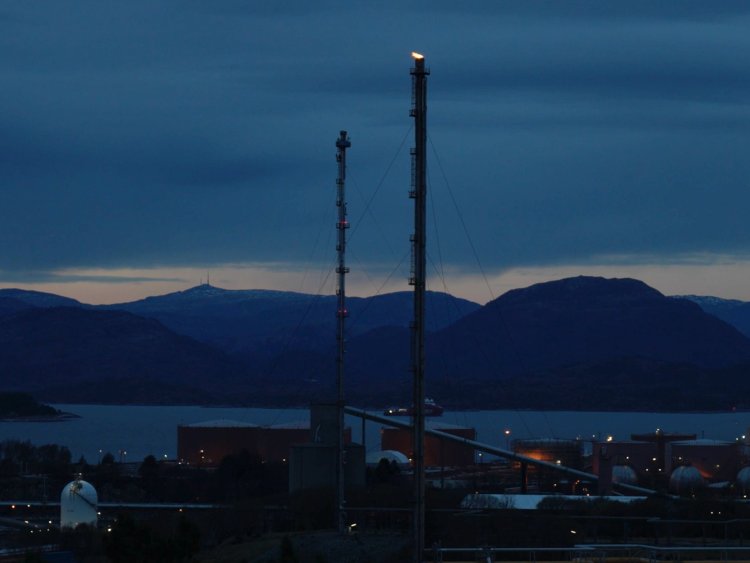
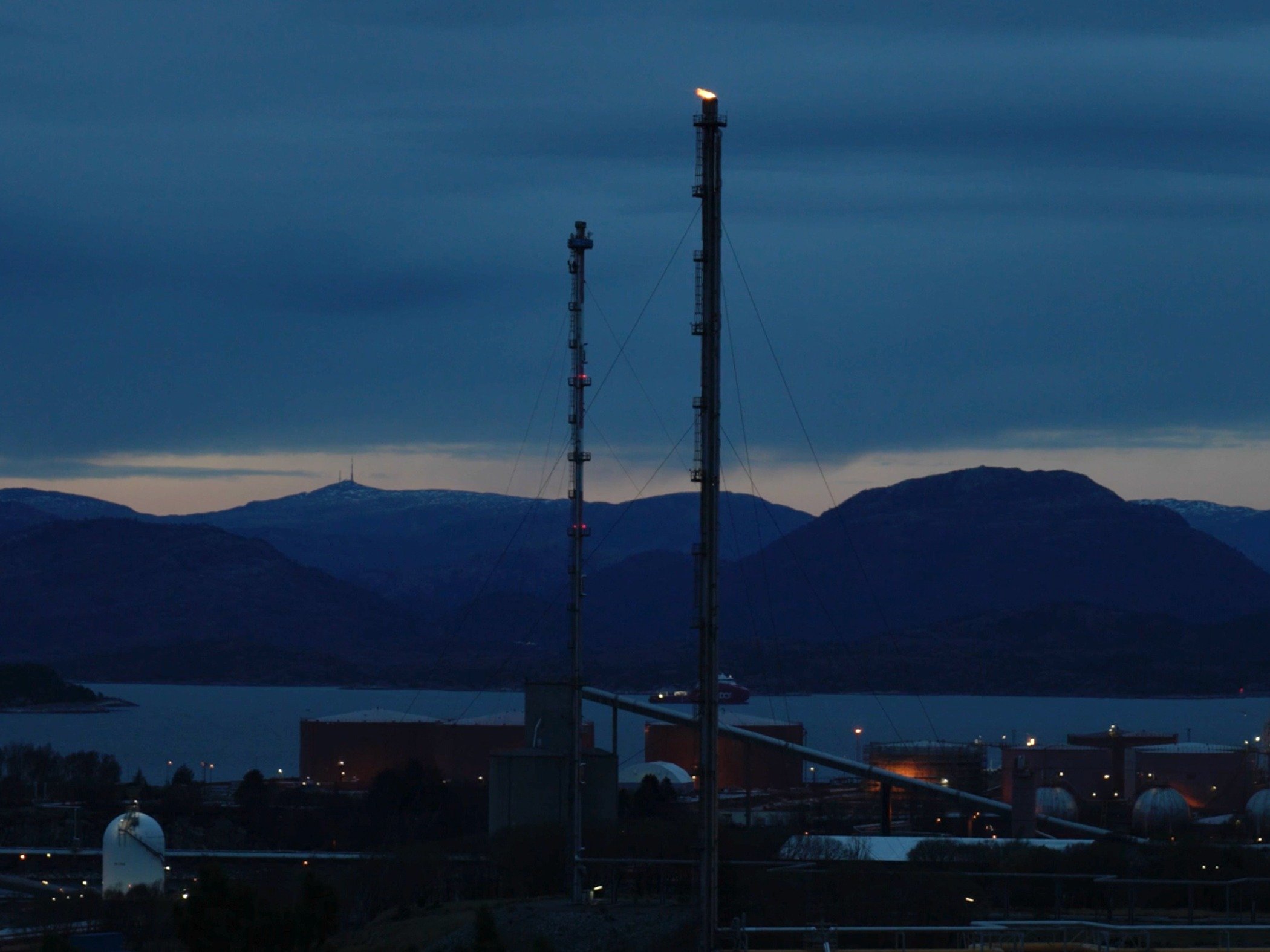
Mongstad is an industrial site in Vestland county, home to Norway’s largest crude oil terminal and refinery, operated by the majority state-owned Norwegian energy company Equinor, alongside other companies including Shell. Visible for miles, a tall flare stack rises above the refinery, crowned by a flame that burns day and night. Locals call it the eternal flame. It is designed to burn off toxic gases that cannot be recovered, processed, or sold, turning them into little more than CO₂ and water vapour.
At dusk, artist Ina Hagen will lead the group to the refinery to watch the site come alive with light as the flame grows more visible against the night sky. Drawing on her long-term research into Norway’s fossil history, she will weave an outdoor lecture with observational exercises. The following day, participants reflect together on the eternal flame, both as they witnessed it and as metaphor and myth, while constructing an image from the associations and observations gathered during the visit.
Departure from Bergen Kunsthall at 19:00, arrival at Mongstad at 20:00, back at Bergen Kunsthall at 22:00. Wear comfortable shoes and warm clothes, and pack snacks.
Abdalla Eltayeb — Workshop: How to Make a Knife
Friday 4 September, 17:00–18:00. Upstairs.
In western Sudan’s ancient iron-smelting tradition, the furnace is a body. It is fed with iron ore excavated from mountain or mine, packed by hand with clay and mud, and set alight for nineteen hours until it gives way to metal. This act of transformation was once a community practice.
The tradition fell out of use roughly a hundred years ago, and by the 1950s had disappeared as a living practice. In the 1960s, academic fieldwork carried out for the UiB Sudan Archive documented the restaging of traditional iron smelting; the material — photographs, family histories, and technical accounts of clay furnace construction and use — was revived for the record. Drawing on this archive, Abdalla Eltayeb proposes a short lecture performance and a collective mind-map making exercise, tracing the furnace as both technology and portal: a threshold connecting worlds, timelines, and forms of knowledge.
Bassam Issa Al-Sabah & Jennifer Mehigan — Performance Lecture: Totalled Venus
Friday 4 September, 14:00–15:30. Bergen Kunsthall and the pleasure gardens at Damsgård Country Mansion.
Every landscape holds scars. Some are cultivated into gardens, their histories of dispossession concealed beneath ornament, walls and carefully managed ground. Through film, sound and conversation, Bassam Issa Al-Sabah and Jennifer Mehigan examine how ornamental landscapes became techniques for organising land, labour and attention.
Beginning with excerpts from their 2024 film Uncensored Lilac, the session unfolds through sound works, diagrams and a performative lecture exploring unmanaged landscapes, private gardens and shell grottos through the lens of Rococo aesthetics in pre-Famine Ireland. Wild roses, Japanese knotweed, “mad honey” and ornamental excess become entry points into questions of ecology, extraction and colonial world-building.
Moving between eighteenth-century Irish Big Houses and contemporary technological infrastructures, the session considers how decorative surfaces obscure the material conditions that sustain them, and how ornament operates as both an aesthetic language and a tactical method. It extends into a visit to the Baroque gardens at Bergen’s Damsgård Country Mansion, one of Scandinavia’s best-preserved eighteenth-century estates, where participants consider how ornamental landscapes shaped ways of seeing and ordering the world, and where cultivation, beauty and power became inseparable.
Karina Sletten — SKULKESKOLEN choir: a sonic landscape
Across all five days, 2–6 September.
Over the five days of SKULKESKOLEN, Karina Sletten will listen to and record the school as it unfolds. Gathering sounds from workshops, field trips, conversations and the environments the group moves through, she will also invite participants to contribute recordings made during their own encounters across the week.
Working with these fragments, Sletten will compose a sonic landscape of SKULKESKOLEN: a collective record shaped by what was heard, noticed and carried between participants and places. The resulting composition traces the school through sound, creating an acoustic memory of its movements, exchanges and surroundings.
Biographies
Abdalla Eltayeb is a cartographer, printmaker, and researcher based in Malmö. Working at the intersection of geospatial analysis and artistic practice, his work explores alternative forms of mapping rooted in memory, displacement, and Sudanese histories. Trained in GIS and daily engaged with maps in professional contexts, he is equally invested in challenging the authority of maps through imagining other forms of mapping. His recent projects use printmaking, archival fragments, and storytelling to trace erased journeys and to imagine otherwise geographies.
Anne Marie Deacy is an Irish sound artist whose focus lies in the creation of work that explores natural and man-made systems and our connections, actions and intra-actions with nature, the land, technology and the cosmos. Her practice delves into real and imagined pasts and speculative futures, interrogating the hidden infrastructures, technologies, rituals, beliefs, power balances and energy exchanges that shape our realities. Rich in experimentation, her practice is informed by alternate field recording, deep listening, transmission and sound as a medium for connection and catalyst for action. Her work is articulated through sculpture, multimedia installation, transmission art, composition and performance, and elaborated through collaborative and interactive forms. She has been supported by The Arts Council of Ireland, Galway County Council, Creative Ireland, the European Union and Goethe-Institut, The Henry Moore Foundation and The National Sculpture Factory, Cork.
Åse Brunborg Lie explores how to create in our present with associated philosophical and ethical questions, and works for more just possible futures. They point out blind spots in historical and social narratives and in built structures, and suggest alternatives to extractivism and human exceptionalism. Central to their practice is site-specificity and cross-pollination, inspired by queer-feminist, postcolonial and scientific thinking. Projects often involve others from creative and scientific fields and from local communities, and include audience-participatory works, performance, sound, multimedia installations, bio art, sculpture, and film. Lie has completed the post-master programme Of Public Interest Lab at the Royal Academy of Fine Arts in Stockholm. They hold an MA in Scenography from the Academy of Performing Arts, HIOF and a BFA from Trondheim Art Academy, NTNU.
Bassam Issa Al-Sabah works with CGI animation, sculpture, textiles, painting, and installation, constructing speculative worlds where fantasy, mythology, and digital culture become methods for reimagining identity, memory, and collective futures. Drawing on the visual languages of anime, video games, and online image cultures, his practice explores transformation as a queer methodology, proposing mutable bodies, mythic narratives, and hybrid ecologies as alternatives to fixed understandings of gender, history, and belonging. His work has been presented across Europe including at the Barbican Centre, London; Jeu de Paume, Paris; FACT Liverpool; De La Warr Pavilion; and The Douglas Hyde Gallery, Dublin. His work is held in the collections of the Irish Museum of Modern Art, the Arts Council of Ireland, and Dún Laoghaire–Rathdown County Council.
Eimear Walshe is an artist from Longford, Ireland. Their practice is concerned with the materials of empire and statecraft, and stories of rupture, dissent, and betrayal in history and in the present. Their work traces the legacies of late nineteenth-century land contestation in Ireland and its relation to private property, sexual conservatism, and the built environment. They have exhibited at the 60th Venice Biennale, EVA International, Van Abbemuseum, the National Sculpture Factory, and Temple Bar Gallery + Studios. Their work is held in the collections of the Arts Council of Ireland and the Irish Museum of Modern Art.
Ina Hagen is an artist and writer living and working in Oslo, Norway. In her artistic practice, which spans video and digital media, text and printed matter, collective making practices and pedagogical forms, Hagen constructs platforms and performative situations for critical reflection. In recent years, a key theme has been the ways in which Norwegian energy colonialism is legitimised and normalised through industry self-presentation in the media, and its consequences on individual, societal, and planetary levels. More broadly, Hagen aims to critically interrogate hegemonic narratives, with an interest in the artistic process as a form of civic participation.
Jennifer Mehigan uses paint, inkjet, neural networks, her garden and her phone; her prints and paintings blend new and old methods of processing the world. She positions the relationships between contemporary image-making technologies and their predecessors as a ‘strained mother-daughter’ dynamic, encompassing wider ideas of reproduction and inheritance in image ecologies. For the past seven years, her research has oriented around the Famine to present alternative vantage points of what abstraction means in an embodied context. Her wider practice incorporates sculpture, filmmaking, publishing, perfumery, and parties. She regularly works in partnership with artist Bassam Issa Al-Sabah. She is currently a research fellow at the International Centre for the Image, Dublin.
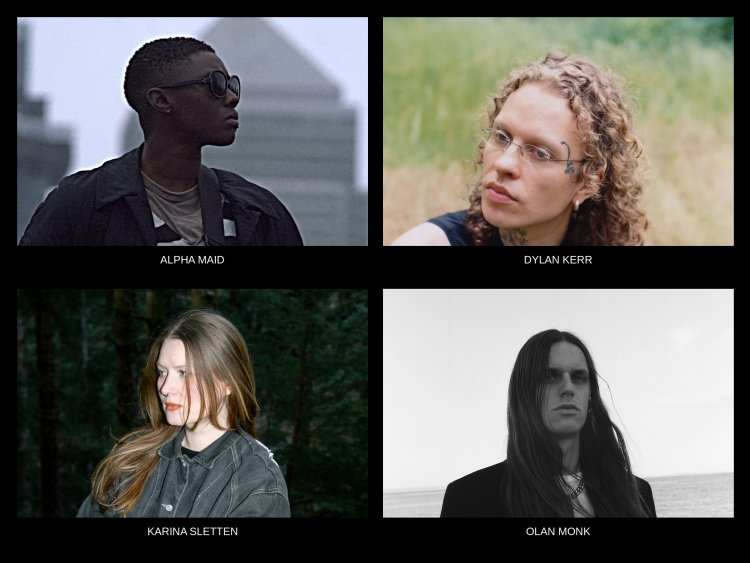
Karina Sletten is an interdisciplinary artist who works with sound art that is strongly influenced by social geography and landscape theories. She studied at the Oslo National Academy of the Arts, and has an MFA in art and public space. She has exhibited at the Autumn Exhibition (2025), Culture of Braga (2025), Oslo Architecture Triennale (2022), and Nitja Centre for Contemporary Art (2021). Her works are process-based and serve as outlets for concrete, socially relevant themes centred on the experience of time, place, and sound.
Katarina Dorothea Isaksen is an artist, researcher and storyteller from Sážžá/Senja, now based in Alver, outside of Bergen. Isaksen has published artistic research in auditory and written forms, often retelling Sámi history through Sámi historical people instead of colonial perspectives. In addition to her artistic research, she has co-curated Jiennagoahti and collaborated with institutions including the Universitetet i Bergen, Høgskulen på Vestlandet, KODE and Bergen Kunsthall to convey Sámi philosophy, history and artistic practices. Isaksen studied visual arts in Bergen, and the traditional Sámi sound artform joik at Nord Universitet.
Tom K. Kemp is a British artist who employs roleplaying game design, animation and filmmaking to tell collaborative stories about complexity and the humans who constitute it. Working through the roleplaying game form to combine political simulation and speculative analysis into semi-improvised group storytelling, participants are invited to parse systems, complicate common narratives, and synthesise an array of knowledge into plot, dialogue, diagram and performance. The Fifth Fire is Tom’s fifth roleplaying game, currently on a playtesting tour around the US and Europe before being formally published later this year.
Credits
The first edition of SKULKESKOLEN is co-curated by Jade Meili Barget and Nora O’Murchú, and developed in partnership with the Department of Computer Science and Information Systems at the University of Limerick in Ireland. The programme is generously supported by Culture Ireland, as part of Cultúr 2026: Sharing Ireland’s Culture, the culture programme for Ireland’s Presidency of the Council of the European Union 2026, Fritt Ord, KORO, Kulturrådet/Arts Council Norway, Mondriaan Fund and Sparebanken Norge.